
D.C. Employment Lawyer and Civil Rights Attorney
If you have been discriminated against, harassed, or pushed out, you deserve a lawyer who will take it seriously and see it through. I represent the employee, not the employer. I stand with workers and individuals who have been wronged by employers, schools, and institutions, and I build the case so the other side has every reason to make it right.
Everything you tell us is confidential, whether or not we end up representing you. Call Us
I Represent the Employee. Not the Employer.
Most lawyers say they handle employment law. What they often mean is they defend employers against the people they have wronged. I do not do that.
I represent the worker. The teacher who was harassed by the principal. The employee who was fired for reporting discrimination. The federal contractor who was retaliated against for speaking up. The person who was passed over because of their race, their gender, their age, or their disability.
When you call me, you are calling a trial attorney who has stood in front of juries, who is willing to take an employment case to trial, and whose name carries weight with opposing counsel because of the work he has done in other courtrooms.
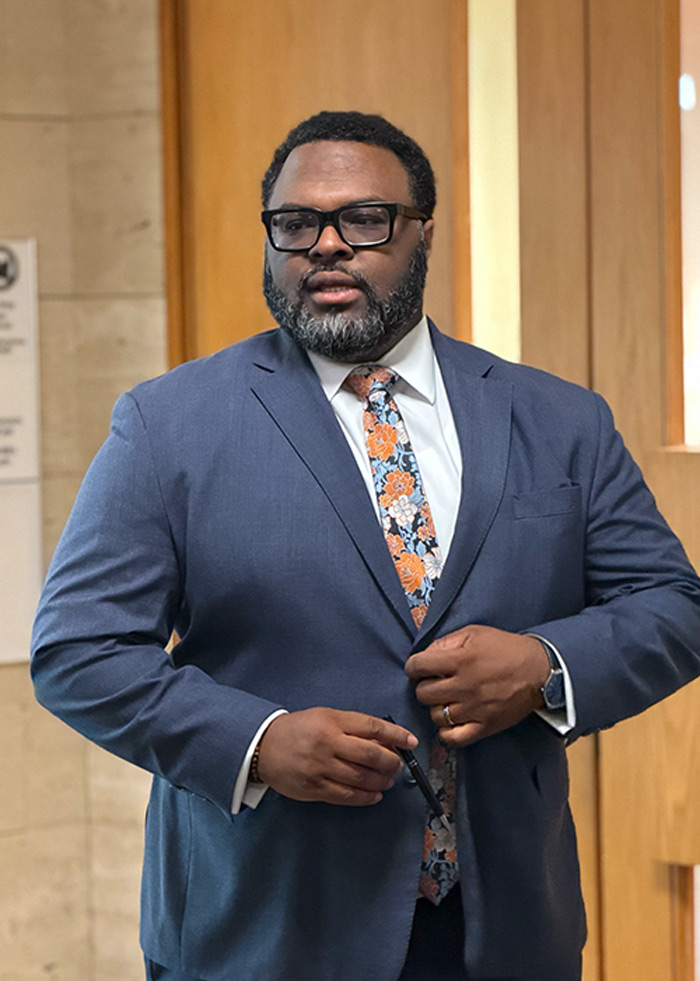
D.C. Employment and Civil Rights Cases I Handle.
Discrimination
- Race discrimination
- Gender and sex discrimination
- Age discrimination (ADEA)
- Disability discrimination (ADA)
- Religious discrimination
- Pregnancy discrimination
- National origin discrimination
Harassment
- Sexual harassment
- Hostile work environment
- Quid pro quo harassment
Retaliation
- Whistleblower retaliation
- Retaliation for reporting discrimination
- Retaliation for taking FMLA leave
Wrongful Termination
- Termination in violation of public policy
- Termination based on a protected characteristic
- Constructive discharge
Civil Rights
- Discrimination by schools and universities
- Discrimination by businesses and public accommodations
- Police misconduct cases (overlap with Criminal Defense)
Your Rights in Washington, D.C.
You are protected by multiple overlapping laws, and your lawyer should know how to use all of them.

Federal law
Title VII of the Civil Rights Act of 1964 (race, color, religion, sex, national origin), the Americans with Disabilities Act, the Age Discrimination in Employment Act, and the Equal Pay Act. Enforced by the Equal Employment Opportunity Commission (EEOC).
D.C. law
The D.C. Human Rights Act protects against discrimination based on race, color, religion, national origin, sex, age, marital status, personal appearance, sexual orientation, gender identity, family responsibilities, matriculation, political affiliation, source of income, disability, and more. D.C.'s protected-category list is broader than federal law's. That matters.
Filing windows are short.
For most federal claims, you have 180 to 300 days from the discriminatory act to file with the EEOC. For D.C. Human Rights Act claims, you generally have one year. Do not wait.

How I Build an Employment Case.
01
Listen
You tell me what happened. I do not interrupt. I take notes. I ask questions. Most employment cases turn on the facts you have not thought to mention yet. The first conversation is about getting the full picture.
02
Preserve
We preserve everything. Emails. Text messages. Performance reviews. Pay stubs. Witness names. Calendar entries. The employer will not preserve evidence that helps you, so we do it ourselves, immediately.
03
Build the legal theory
There are usually multiple possible theories: Title VII, the ADA, the D.C. Human Rights Act, retaliation, common-law claims. We build the strongest combination for the facts.
04
File and pressure
We file with the EEOC and the D.C. Office of Human Rights. We move the case forward. We collect evidence through discovery if litigation begins. We build the case the way I build a criminal trial, for the day we walk into court.
05
Settle from strength, or try the case
Most employment cases settle. The ones that settle for real money are the ones the other side believes can be tried. I am willing to try the case. Most lawyers in this lane are not. That is the difference.
Cases Won
Past results do not guarantee future outcomes. Every case is different.
Murder
United States v. Tony Alexander
Result
Won at trial
Federal
United States v. Kimberly Baggett
Result
Federal accessory-after -the-fact case, won at trial.
Criminal
United States v. Charles Thompson Jr.
Result
Successfully defeated the Government at jury trial alleging Assault with a Deadly Weapon
I know reaching out is hard. You are worried about retaliation. You are worried about your career. You are worried about whether anyone will believe you.
Every conversation we have is protected by attorney-client privilege from the first call, even if we never end up working together. Your employer will not learn you called. We can use a personal email and a private phone number for the initial conversation. We can meet outside the office if you prefer.
The first step is just a conversation.
Frequently Asked Questions.
How do I know if I have an employment case?
You probably will not know for sure until you have talked to a lawyer. But the basics: if you have been treated differently because of a protected characteristic, if you have been retaliated against for reporting discrimination or harassment, or if you have been fired in violation of public policy, you may have a case. The first conversation is free.
How much does an employment lawyer cost in D.C.?
For most employee-side cases, I work on contingency or a hybrid arrangement, so you do not pay by the hour or up front. The structure depends on the type of case and the likely path, and we go over it together in the first meeting.
Can my employer fire me for filing a complaint?
That would itself be retaliation, which is illegal under both federal and D.C. law. Retaliation cases are often stronger than the underlying discrimination claim, because the employer’s response is documented and recent. If your employer has fired you or retaliated for raising a concern, call immediately.
How long do I have to file an employment claim in D.C.?
For most federal claims, you have 180 to 300 days to file a charge with the EEOC. For D.C. Human Rights Act claims, you generally have one year to file with the D.C. Office of Human Rights. Some claims have other deadlines. Time matters more in employment law than almost any other practice area.
What if I signed a severance agreement that waives my claims?
A signed waiver is not always enforceable. Severance agreements can be challenged based on duress, lack of consideration, or because the agreement violates public policy. Bring the document. Let me look at it before you accept that you have no options.
What is the difference between the EEOC and the D.C. Office of Human Rights?
Both investigate discrimination complaints. The EEOC enforces federal law. The D.C. Office of Human Rights enforces the D.C. Human Rights Act, which protects a broader list of categories. Many cases are filed with both. We decide the right strategy together.
Will my employer find out I called a lawyer?
Not unless you tell them. Your initial consultation is confidential. We can communicate through your personal email, your personal phone, and outside-of-work meetings if needed.
How long does an employment case take?
EEOC investigations can take six months to two years. If we file in court, litigation typically takes one to three years. Many cases settle along the way. I will give you a realistic timeline based on your facts.
Do I have to quit my job to file a case?
No. You can pursue a discrimination or harassment claim while still employed. In fact, your case is often stronger if you stay, because you continue to document, and retaliation becomes harder for the employer.
Do you handle civil rights cases beyond employment?
Yes. Civil rights claims against schools, businesses, and institutions, and matters involving police misconduct, which often overlap with criminal defense.
Take the First Step
Reach Out. Confidentially
If something has happened to you at work that does not feel right, you do not have to know whether it is a case before you call. You just have to make the call.